If you have ever stood in Hall 1 at Messe Düsseldorf at 05:45 AM before an opening day of MEDICA, or walked the cavernous concourses of Hall 3 at Messe Frankfurt during Light + Building, you already know the atmosphere.
Forklifts are reversing out of service gates. The sharp scent of fresh lacquer and carpet adhesive hangs in the air. Industrial cleaning machines are buffing high-gloss white laminate floors. And somewhere in the center aisle, a stand builder’s project manager is holding a clipboard, running on three hours of sleep, checking off the final electrical lines before the client’s executive delegation arrives.
This is where commercial exhibition media is won or lost. It doesn't happen at 11:30 AM when the aisles are jammed with badge-wearing crowds, empty coffee cups are sitting on reception desks, and smudged fingerprints cover glass vitrines.
Capturing a €120,000 custom exhibition stand so that it looks like a €300,000 architectural masterpiece requires precision, field experience, and strict adherence to the unwritten rules of German trade fair logistics. Here is how our crews operate on the ground.
Never schedule your main architectural documentation shoot during public hours. The only window where a stand looks pristine, straight, and museum-grade is between 06:00 AM and 08:30 AM on the morning of Day 1, or between 19:30 and 22:00 on the evening of handover (*Abnahme*).
1. The 06:00 AM Window: The Only Time True Architecture Exists
An exhibition stand is temporary architecture, but it is still architecture. To capture clean sightlines, the photographer needs clear 25-meter perimeter clearance.
Once the hall doors unlock at 09:00 AM:
- Aisles are packed with pedestrians whose legs cut across every wide-angle frame.
- Coat racks in the hospitality lounge fill up with winter jackets and laptop backpacks.
- Brochure holders get picked through and disheveled.
- Fingerprints accumulate on touchscreens, vitrines, and brushed aluminum edges.
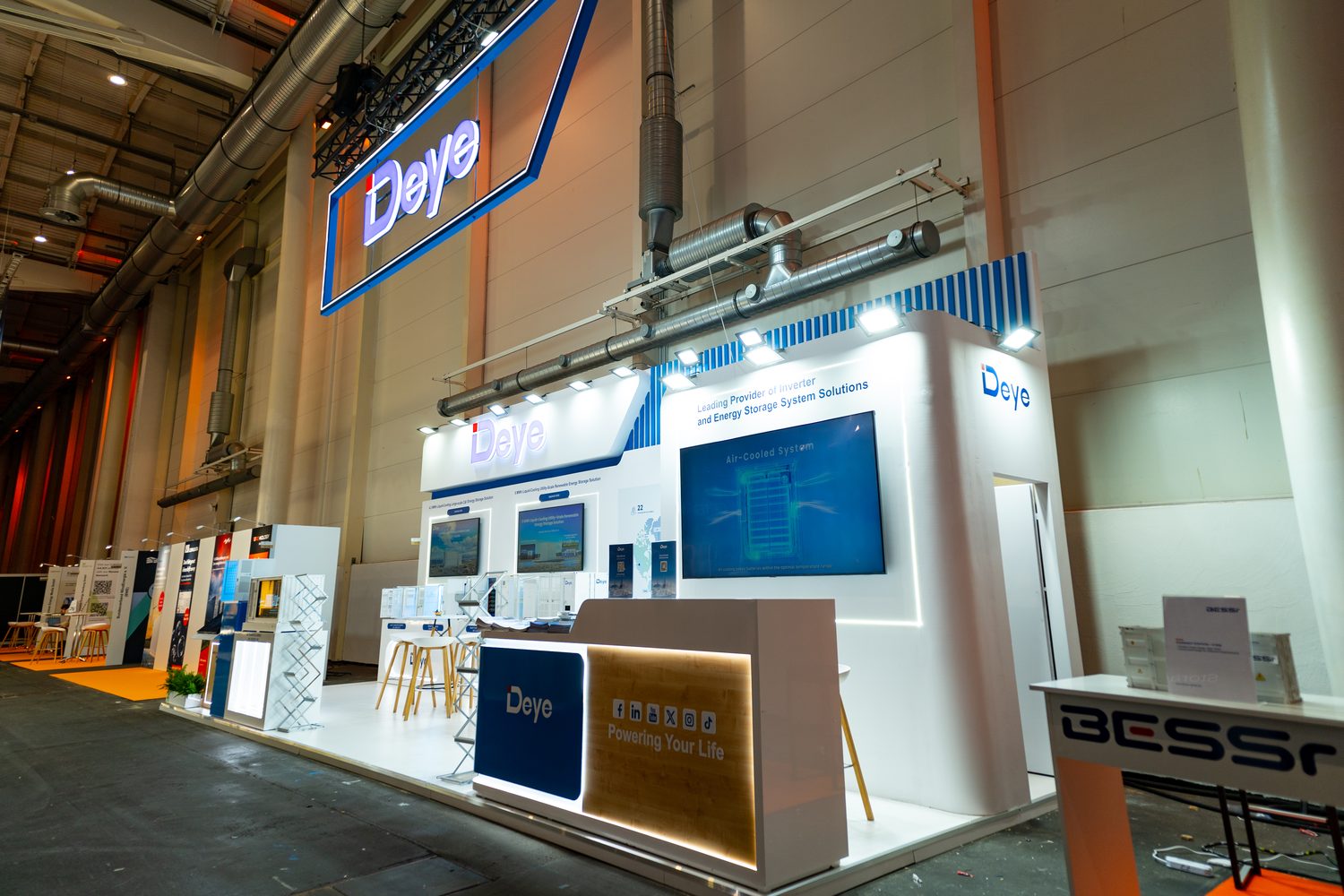
During the 06:00 AM pre-opening slot, the hall work-lights are switched to 100% operational power. The stand’s own integrated LED profiles, edge-lit signs, and back-lit lightbox walls can be calibrated to their exact design balance without interference. Our crew works systematically with shift-tilt lenses on geared tripod heads to capture the full booth perimeter before the first exhibitor barista pours an espresso.
2. The Optical Nightmare: 5600K Ceiling Floods vs 2700K Warm Spots
Every German exhibition hall presents a vicious lighting conflict that amateur camera operators struggle to handle:
- The Hall High-Bay Fixtures: Massive metal-halide or industrial LED ceiling lamps throwing cool, greenish daylight (5200K – 5800K).
- The Stand Architecture: Warm, inviting retail and hospitality spots (2700K – 3000K) designed by the interior architect to create an intimate meeting zone.
- Digital Video Walls: High-brightness P2.5/P1.9 LED screens emitting high-energy cool blue and red spikes.
If a photographer sets auto-white-balance, the white drywall turns yellow and the ceiling glows toxic neon green. Correcting this requires dual-exposure bracketing and custom spectral color profiles mapped to the stand's actual RAL paint codes. We measure the CCT (Correlated Color Temperature) on the main brand wall so corporate brand colors match the corporate identity guidelines under printing press scrutiny.
3. The Stand Builder's Shield: Handover Documentation (Beweissicherung)
For European booth builders (*Messebauunternehmen*), high-resolution photography is not merely a marketing luxury. It is a vital legal safeguard.
Consider this common scenario: A stand builder hands over a complex two-story island booth to an overseas client on Monday at 18:00. The handover protocol (*Abnahmeprotokoll*) is signed. Overnight, the exhibitor’s own local staff drags heavy machinery, product display pallets, and flight cases onto the stand, scratching a high-gloss floor or bumping a finished corner panel.
On Tuesday morning, the client disputes the invoice, claiming the booth was delivered with surface defects.
When our crew conducts timestamped Abnahmefotografie on Monday evening right as the final protective film is peeled from the floor:
- Every miter joint, edge finish, and glass pane is documented in razor-sharp 45-megapixel clarity.
- The stand builder possesses incontestable visual proof that the structure was delivered in flawless, showroom condition.
- Invoice approvals and warranty sign-offs proceed without friction.
4. Venue Realities: Düsseldorf vs. Frankfurt
No two exhibition centers in Germany operate the same way. Working efficiently means knowing the physical layout:
Messe Düsseldorf
Layout: Halls 1 through 17 form a sprawling loop around the central open-air arena, with distinct North and South hubs.
What to watch: Hall 1 and Hall 3 have immense modern ceiling heights allowing 6-meter-plus structural spans. Watch out for reflection glare from the river Rhine entrance natural daylight spilling through the southern glass facades.
Major Expos: MEDICA, Drupa, ProWein, K-Messe, Caravan Salon.
Messe Frankfurt
Layout: Multi-tiered, vertically stacked halls (Hall 3.0/3.1, Hall 4, Hall 11, Hall 12) connected by the iconic *Via Mobile* travelator tunnels.
What to watch: Moving heavy camera wagons between Hall 11 (Portalhaus) and Hall 3 takes 20+ minutes through security checkpoints. Dedicated hall passes and service freight elevator timings must be planned the day prior.
Major Expos: Light + Building, Automechanika, Ambiente, ACHEMA.
5. From a 4-Day Stand to a 12-Month Evergreen Sales Engine
A premier trade fair presence costs anywhere from €40,000 to €250,000+ once booth space, construction, electrical hookups, catering, and travel are tallied. Ninety-six hours after the opening ribbon is cut, that entire physical investment is dismantled into skips.
What remains?
If you only leave with casual smartphone clips, your investment evaporates. But when captured as an evergreen commercial production:
- On-Site Executive Interviews: We mic up your managing directors and product heads in the booth lounge, recording 4K thought-leadership videos that anchor your LinkedIn marketing for three quarters.
- Dynamic Motion Showreels: Fast-paced, cinematic 60-second highlight films delivered within 24 hours to spark viral engagement while the trade fair is still trending.
- B2B Tender Pitches: Stand builders use our architectural lookbooks to out-pitch competitors when bidding on next year’s multi-fair enterprise contracts.

6. The 24-Hour Delivery Mandate
The era of waiting 3 weeks for an agency to edit exhibition photos is dead.
In modern B2B marketing, the highest engagement window happens during the show itself. When your social media team can publish a crisp, cinematic 30-second teaser reel on LinkedIn on Day 2 of the expo, you actively pull walking trade visitors into your specific hall aisle.
At Shine Media, we operate with a dedicated on-site mobile grading station. Initial hero stills and social cuts are processed and delivered within 6 to 12 hours of wrap, giving marketing directors immediate ammunition while the trade show buzz is peaking.
Planning an Exhibition Stand in Germany?
Whether you are an international exhibitor preparing for your next showcase or a German booth builder looking for a dedicated white-label media partner in Düsseldorf, Frankfurt, or Munich: